
Your Bank Knows More Than You Think
Privacy advocates are always looking for alternatives to banking. Here's why.

This is Part 1 of a 3 part series on financial privacy. Make sure to sign up to get Parts 2 & 3 delivered straight to your inbox.
Protecting your financial privacy is one of those topics that never goes out of style in the privacy community. I still regularly get questions about it in Q&As, my inbox, or just see them being asked in online forums.
While I strongly object to the belief that privacy is dead, I do readily concede that total privacy is becoming harder and harder to accomplish.
 Privacy Guides
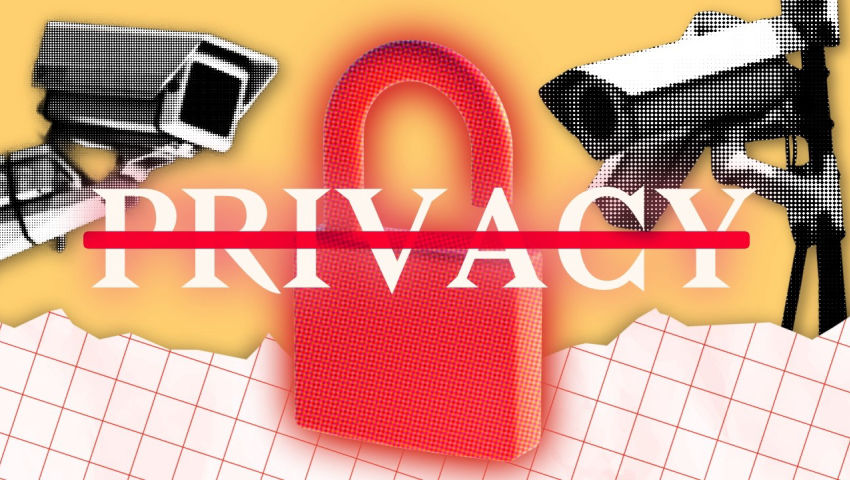
For example: you could choose to pay your power bill in cash for maximum privacy, but this requires going down to one of their payment centers in person and you're guaranteed to be caught on some kind of camera at some point during that trip - either a Flock camera, Ring doorbell, or security camera in the bus while in transit or the security cameras at the facility while making your payment.
Much like every other facet of life, financial privacy is not about being perfectly anonymous, but your threat model and the balance between maximum privacy and sustainability/convenience.
To Bank or Not to Bank
Most people have probably never even considered avoiding a bank.
I remember the excitement of opening my first bank account as a teenager. It felt like a rite of passage, on par with getting my driver's license or graduating. I was finally becoming an independent adult.
Indeed, access to banking remains an important issue, commonly used as a metric for measuring a country's economic development and equality, opportunity, and quality of life for its citizens.
But many hardcore privacy enthusiasts view banks as an enemy - or at best, a necessary evil.
In this post, I'll attempt to explain the primary concerns that privacy advocates have with modern financial institutions.
Know Your Customer Laws
Know Your Customer (KYC) laws are regulatory frameworks in financial services that require institutions to verify customer identities, assess risks, and monitor transactions to prevent money laundering and financing of terrorism.
Anti-money laundering laws in their current form began to get passed in the United States in the 1970s but KYC specifically was ramped up after 9/11 under Section 326 of the PATRIOT Act, which introduced a Customer Identification Program (CIP) requiring name, date of birth, address, and other ID numbers. In 2016, FinCEN added a rule requiring ongoing monitoring.
Generally speaking, KYC is the root of most hardcore privacy enthusiasts' concerns. Like many things, it's not so much the data collection itself that's alarming, but rather the potential it creates.
By design, KYC removes all privacy from the financial system. While this can have good consequences - like stopping crime - it also makes abuse possible in the form of data breaches, data sharing, and financial censorship.
Data Breaches
The potential for data breaches is not paranoia or a hypothetical.
When I joined Surveillance Report back in 2021, the one "demand" I made of Henry was that I wanted to incorporate a "Data Breaches" section. I had been running a news feed since 2018 and I had noticed that data breaches were disturbingly common. I figured that reporting on them would serve two purposes:
- Alert people to how shockingly often they happen.
- Potentially alert users or customers of a service who was breached but hadn't been informed for one reason or another.
Since then, I can count on one hand how many weeks didn't have a data breach come across my news feed.
It's especially worth noting that these are only data breaches that I learned about. It's entirely possible - likely even - that there were data breaches that simply flew under my radar. (Many of the breaches I report on are disclosed weeks or even months later.)
But it's not just anecdotal evidence.
- SentinelOne reports that there are currently 2,090 cyber attacks per week, with data breaches on the rise by 3% month-over-month in January 2026.
- Varonis says there were 3,2000 data breaches in 2023 (up from a mere 447 in 2012).
- Huntress reports that 1.3 billion people had their data leaked in 2024.
Each breach typically impacts somewhere between a few thousand and a few million victims.
Some of the data exposed can be changed easily, like email address or phone number. Some can be changed but with a lot of extra effort, like physical address. Some of it requires so much effort to change that for all intents and purposes it's impossible, like name or social security number.
Data Sharing
It's no secret that the biggest lie on the internet is "I have read the terms & conditions." You can be forgiven for this.
One study from Carnegie Mellon found that if you actually read every privacy policy and terms of service you encounter in a given year, it would add up to 76 8-hour days (about 3 months' worth).
Another study found that the top 13 apps of 2020 combined were longer than any of the first three Harry Potter books.

Of course, as the saying goes: this is a feature, not a bug.
Companies purposely write their terms in very broad, vague language to protect themselves from lawsuits and give themselves the freedom to do whatever they want in the future.
More often that not, buried in all that legalese you didn't read is something about how you consent to data sharing with "trusted third parties" or "third party affiliates" (or something similar). This is usually lawyer-speak for advertisers and data brokers, and banks are no exception to this.
- How Bank Marketers Can Use First-Party Data to Rev Up Campaigns
- Banks are dipping their toes into the retail media waters
- Consumer Financial Data in Advertising: Critical Privacy Concerns
- Financial media networks are springing up as banks chase ad dollars
- How Banks Use and Share Customer Data
If you're not sure why this is a problem, focus on that last link and scroll down to "How Financial Data May Be Used."
Financial data is increasingly being used for things like:
- Background checks
- Determining eligibility for auto loans, home loans, apartment rentals, and even jobs
- Insurance rates
- "Surveillance pricing"
In case you're not familiar with that last one, "surveillance pricing" is exactly what it sounds like: using data to "personalize" how much you pay for something like hotel rooms, flights, rideshares, and other online purchases.


Algorithmic Inequality
As just noted, we are living in a world where algorithms are increasingly used to make decisions, and unfortunately people are increasingly deferring to the decisions of the algorithm.
A lot of people have fallen for the lie that computers aren't biased. We feed it so much data that it's practically god-like its in omniscience. How could it possibly be wrong?
Of course, there's no shortage of evidence disproving this. Computers do exactly what you tell them to: no more, no less. If you feed it biased data, you'll get biased decisions.
- Amazon's hiring algorithm was only trained on male applications, so it learned to filter out resumes that contained markers like women-only colleges or women's sports.
- An algorithm designed to recognize wolves and huskies was fed only pictures of wolves in snow, so it learned to categorize based on the presence snow instead of the actual animal.
- Numerous facial recognition softwares are only trained on young white men, and therefore struggle to identify women or people of color.
Big Data works by aggregating large amounts of data and finding patterns and averages. Tech companies have sold us on the idea that invading our privacy offers more personalization - for example: if you're a safer driver than the average, then you can pay less than average.
However, when this backfires, it can often cause serious problems with little recourse to appeal the judgements.
- American Express once lowered a man's credit limit because he shopped at "deadbeat" establishments like Walmart.
- The UK penalized welfare recipients for things like buying name-brand products instead of generic alternatives.
- Minorities are consistently offered higher-priced loans even when controlling for credit scores and income.
The banks simply aren't incentivized to care. As far as they're concerned, you're collateral damage. The mistake should be corrected, but these things happen. "Gotta crack a few eggs to make an omelette," and such.
But for you, this can be catastrophic. As I said earlier, financial data is increasingly used to determine housing and job opportunities, among many other things.
The craziest part is that these systems have no mechanism for feedback and correction. How do you tell the algorithm that it was wrong and you'd actually be a great employee or renter? You can't.
Sucks to suck, scrub.
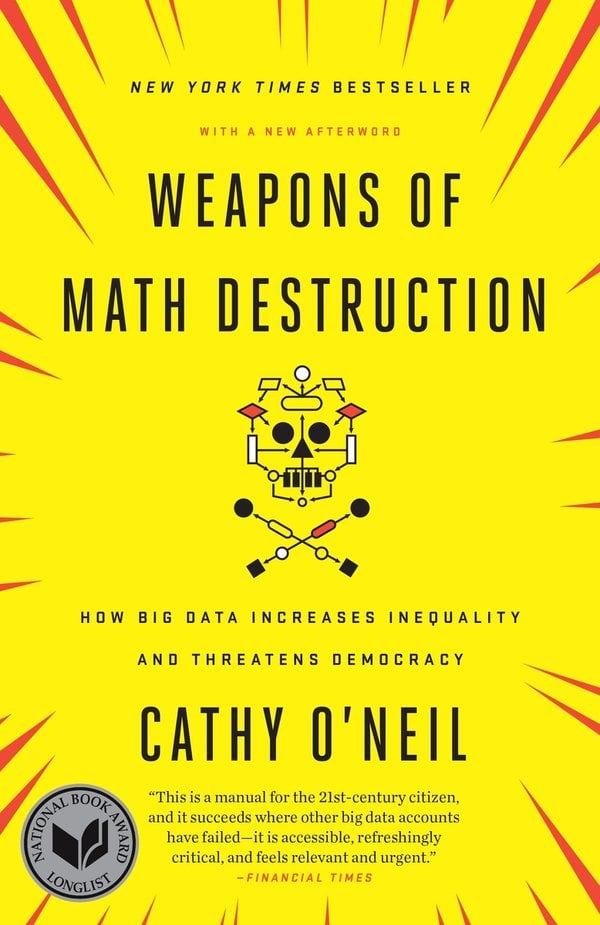
These problems are discussed extensively in Cathy O'Neal's seminal work Weapons of Math Destruction. I highly recommend it if you're interested in learning more about this topic.
 Cathy O’Neil
The New Oil is supported by our audience. If you're getting value out of our work, please consider supporting us. (It gets rid of this banner and you get posts a week early!)
Financial Censorship
Possibly the "final boss" of concerns among digital rights advocates is financial censorship. This is probably the least likely scenario for most individuals but once again: the chances are never zero, appeal is nearly impossible, and the impacts are an attack on democracy and free speech itself.
It is a tool of political oppression.
- Payment processors like Bank of America, VISA, MasterCard, PayPal, and Western Union blocked donations to WikiLeaks in retaliation for the exposure of top secret documents.
- Fidelity, Charles Schwab, and Vanguard blocked donor-advised fund donations to the Southern Poverty Law Center after criticisms of the Trump administration.
- GoFundMe blocked donations to truckers who were on strike in protest of vaccine mandates.
- Steam removed numerous adult games from the store after threats from payment processors.
This is an issue that spans the political spectrum and impacts everything from free speech, government transparency and accountability, activism, protesting, and more.
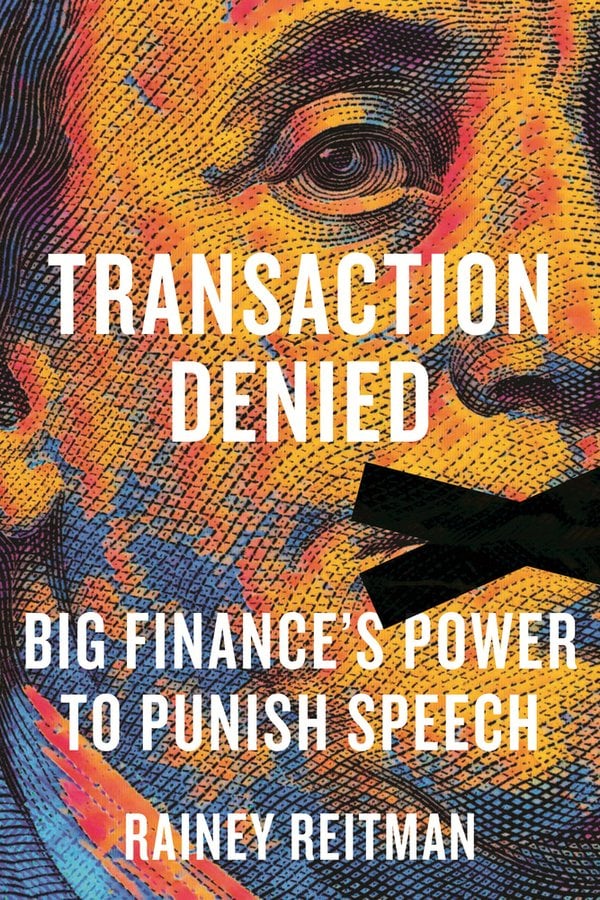
For more on this topic, I recommend Rainey Reitman's new book Transaction Denied.
 Rainey Reitman
Once men turned their thinking over to machines in the hope that this would set them free. But that only permitted other men with machines to enslave them.
- Dune, Frank Herbert
Part 2
This blog post was originally well over 5,000 words and still not done. Rather than assault my audience with a novel, I figured it would make more sense to split things up into digestible pieces.
This week, I laid out some of the main concerns and threats with the modern banking system.
Next week, I'll be discussing some common banking alternatives such as cryptocurrency and cash-only and why I think these strategies are unwise when taken to the extreme.
And finally, in Part 3, I'll talk about why I still recommend banks (spoiler alert), as well as some strategies for taking advantage of the banking system while protecting your privacy and financial resilience.
I hope you'll subscribe and come along.
Tech changes fast, so be sure to check out our website for all the latest recommendations, tools, services, and more.


