
The False Promise of Going Off-Grid
Privacy advocates are always looking for alternatives to banking, but most of the alternatives are actually even worse.

Last week, I highlighted the risks of traditional financial institutions and why us privacy enthusiasts are always keeping an eye out for better alternatives. I pointed out that Know Your Customer (KYC) laws enable the potential for abuses, including but not limited to:
- Data breaches
- Data sharing
- Financial censorship
Unfortunately the alternatives to a traditional financial institution are limited and arguably worse.
There are technically a myriad of alternatives to traditional big-name banks, but many of them - like credit unions or online-only banks - fail to adequately our earlier privacy concerns.
At the end of the day I think the two "lowest common denominators" are cryptocurrency and cash.
Some of the alternatives I found in my research are just cash or cryptocurrency with extra steps, like prepaid cards, stablecoins, or precious metals.
While I am a proponent of both cash and cryptocurrency, I believe they're both poor substitutes for long-term places to store the bulk of your wealth.
Here's why.
Cash
There's a myriad of reasons that storing the bulk of your savings in liquid cash is insane.
Theft
If we're being realistic, probably the most likely risk to keeping piles of cash is damage or theft.
Theft is probably the most likely threat, statistically speaking.
While crime is at historic lows (and has been trending downward since 2022), currently property crimes occur at an average rate of 1,575 per 100,000 - in other words, there's about 5.3 million property crime victims in America in any given year.
Experienced readers know that nothing is unhackable, and that extends into the world of physical security. No matter how much you reinforce your door or how high you build your fences, you can never be 100% certain that your home is perfectly secure.
The defender needs to get it right every single time. The attacker only needs to get lucky once.
All a burglar needs is that one rusted screw, or weak glass, or door that got accidentally left unlocked once, or security guard who's having an off day and now he can make off with your life savings.
Damage
Arrogant readers who overestimate their own intelligence might think "I'm smart, I can hide my money in a place burglars won't find it." And you might be right. But if I may be so bold, let me impart some wisdom:
I've moved across the country multiple times - from coast to coast border to border - and one often-forgotten truth is that everywhere is prone to disaster. Florida has hurricanes, California has wildfires, Texas has floods, Illinois has blizzards, and so on.
While you can often prepare for these kinds of threats, you can never completely remove them and some of them can happen at speeds that would blow your mind. You can never completely remove the risk of an electrical fire, a flash flood, or some other disaster that destroys your home too fast for you to get home from the office or grocery store or causes you to have to evacuate before you have time to recover your cash from it's super secret hiding place that nobody would ever think to look.
Inflation
And if that's still not enough to convince you, you should know that one major reason finance experts advise against the proverbial "life savings under the mattress" is that people can almost never save enough money to outpace inflation.

Unless you have a very high salary and keep your expenses insanely low, there's almost no chance you can save up enough money for retirement, a home purchase, or other large financial goals on pure cash alone.
Yes, there are people out there who can do that, but they are the exception. Statistically speaking, you reading this are not one of those people. It's far better to take the tried-and-true methods like retirement accounts, high-yield savings accounts, and other financial tools available to you.
Forfeiture
But there's another risk that I need to explain. It's statistically unlikely for most of my readers, but personally it makes my blood boil and it requires a lot of explaining for people who aren't familiar with it, so apologies for giving this next risk a disproportionate amount of discussion time.
In America we have a legal doctrine called “civil asset forfeiture.” This is basically where the government has the legal right to say “we want your thing, so it’s ours now.”
No, that's not exaggeration or oversimplification.
 Contributors to Wikimedia projects
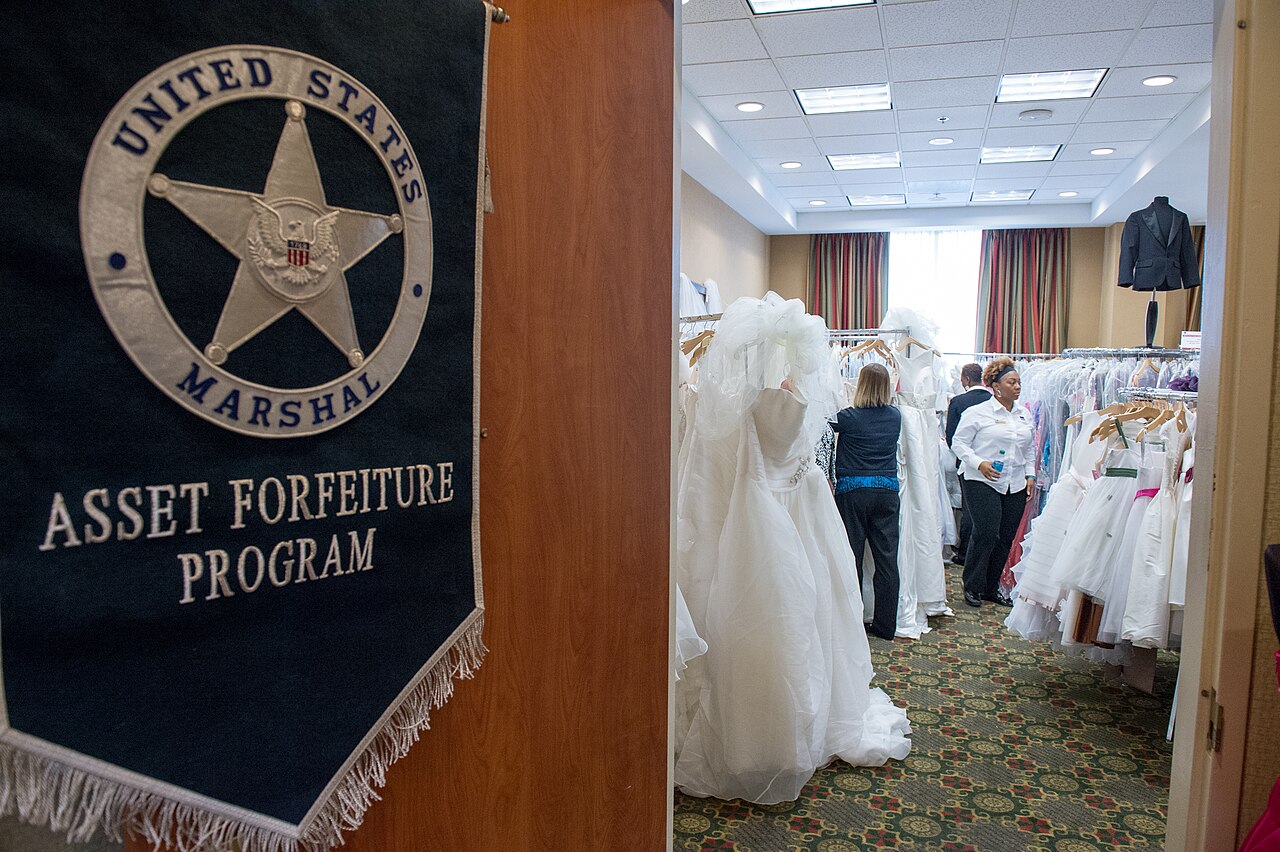
Here's an example of one way it's supposed to work in theory:
Let's say you're a successful drug dealer who bought a Lamborghini. The cops arrested you and confiscate all your drugs, as well as anything else drug-related, including said Lambo you bought with illegal drug money. The cops then auction your sweet ride and use the money to fund busting more drug dealers - more cops, more gear, etc.
On paper, most people would probably say that's reasonable.
In practice, however, what happens with shocking regularity is that the cops say “I want this, so I'm taking it. Fight me in court if you want it back.”
The only requirement for asset forfeiture is that the officer has to suspect that your property was involved in a crime somehow. There is no proof required. It's a lot like the cliche (but very real) loophole where a cop can pull you over and say "I think I smell weed" and now they can legally search your car without a warrant.
Depending on the agency and jurisdiction, there are numerous incentives for a cop to do this.
- Money made from these seizures (or sales of goods like cars and houses) often goes back to the department, increasing their budget. It's not hard to imagine officers who bring in a lot of money get fast-tracked for promotions or raises.
- In some cases, the money ends up in private hands to fund things like lavish parties, home upgrades, and more.
- Even if they can't, they can still benefit. For example, an officer now knows that a nearly-new Lamborghini is about to be auctioned off for pennies on the dollar and they can go bid for it at the police auction.
As one Substack writer notes:
If you want your stuff back, you have to go to court and affirmatively prove your innocence. Basically, you must prove a negative: that you did not commit a crime. It’s a complete inversion of the “innocent until proven guilty” philosophy driving most of the criminal justice system.
This is not rare.
It’s not even uncommon.
In 2014, police stole more money from innocent civilians than burglars did. And 2014 was not an anomaly. This was also true in 2015 and 2019.
Police have been stealing so much money so consistently that in 2019 the US Supreme Court attempted to intervene, and Congress again this year.
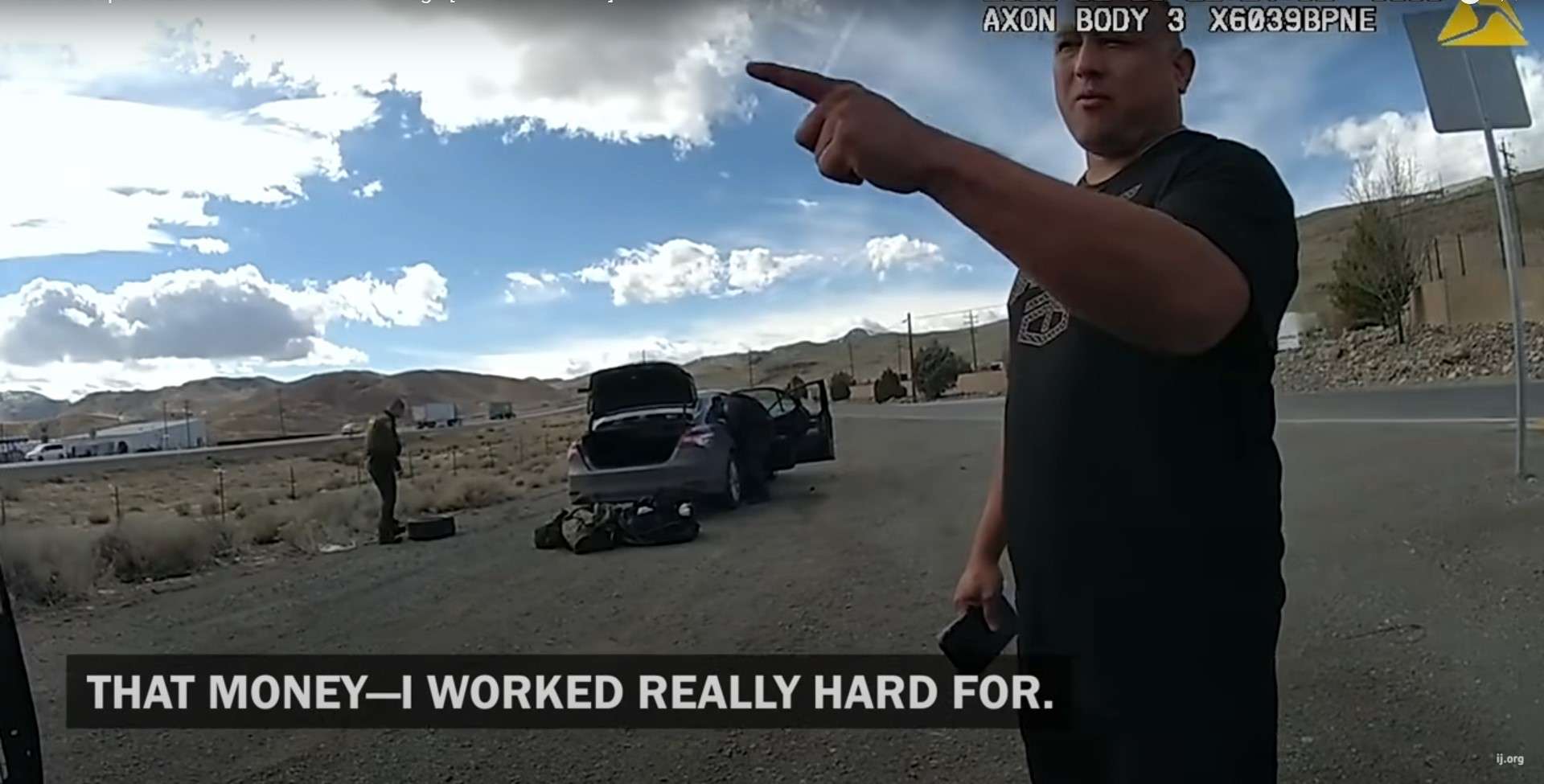
If you want to read about a specifically poignant case of this, combat veteran Stephan Lara got robbed of his life savings ($87,000 USD) leaving him stranded on the side of the road. Literally.
 C.J. Ciaramella
To be very clear, my point is not "all cops are bastards" or whatever.
My point is that you are gambling every time you keep your money in any tangible format like cash, gold, art, etc. All it takes is one lucky criminal, one neighbor forgetting to turn off the oven, one "bad apple" to say “that's mine now” and now it's all gone.
The Nuance
It's important to have a readily accessible emergency fund, and I strongly advocate for having enough physical cash to be able to pay for groceries and other expenses if the power or internet goes out for several days.
There are numerous examples in modern, developed countries where this has happened, including one that yours truly personally lived through.
 Andy Greenberg and Excerpt
What I'm advocating against is the idea of storing the bulk of your money in cash. Never let your desire for privacy ruin your life or opportunities to be safe and successful.
The New Oil is supported by our audience. If you're getting value out of our work, please consider supporting us. (It gets rid of this banner and you get posts a week early!)
Cryptocurrency
Cryptocurrency does have a few advantages going for it in terms of privacy and financial sovereignty over traditional "fiat currency." For example:
- Cryptocurrencies are decentralized and (when done correctly) self-custodial. That means there's no bank to decline you or your transactions, demand your data, or freeze/seize your funds.
- Some cryptocurrencies - like Monero and ZCash - have privacy tools built into them to make transaction privacy easier or (in some cases) the default.
- Cryptocurrencies are becoming more widely supported for direct spending without first converting it to fiat currency. This is especially true for online services and services that put a heavy emphasis on privacy or individual liberties.
However, there are also a significant number of drawbacks.
- There is no insurance against lost, stolen, or misplaced crypto. If you send coins to the wrong address, lose your account access, or get hacked, you're on your own.
- The barriers to entry to get cryptocurrency often involve exchanges who practice KYC laws, making it harder to use them in a truly private manner like they were intended.
- Most cryptocurrencies (like Bitcoin) are not built privacy-first and it can sometimes require a tremendous amount of work to make them private or anonymous.
- They're still not accepted everywhere, especially for major expenses like paying rent, utility bills, or groceries.
To me, the single biggest reason that most people shouldn't place all their bets on cryptocurrency remains volatility.
Bitcoin was worth just 9 cents when it debuted in 2008, and peaked in value at somewhere around $126,198 on October 6, 2025. That's a change of 140,120% in less than 20 years.
And that's great when Bitcoin goes up, but Bitcoin also goes down.
Hard.
In the past year, Bitcoin is down 33.31% ($38,631.08 USD).
Of course, markets fluctuate all the time, but the US dollar value doesn't fluctuate on any scale or speed remotely comparable to Bitcoin.
In my previous blog post covering this topic on May 22, 2023, I noted that at that time Bitcoin had halved in less than two weeks and fluctuated by 3.23% ($858 USD) in the past 24 hours.
I was going to cite some statistics about the stock market, but honestly it really doesn't matter. Stock market changes impact your retirement account and to some extent the cost of goods and services, but its not a 1:1 comparison.
A better comparison would be imagining that the cash in your wallet or checking account halves in two weeks.
Most of us would have a hard time if our bank account suddenly lost 1/4-1/2 of the funds in there in that kind of time window. Even with a healthy savings account, that would be a tough pill to swallow.
The economy is a confusing and complicated thing, and hyperinflation scenarios exactly like that have indeed happened in history, but it's not happening in the US right now and it's almost certainly not going to suddenly happen out of the blue with no warning signs. There will be warning signs that currently aren't present in the US.
Yes, our economy is a very concerning spot but no credible experts are noting the kind of warning signs that point toward runaway hyperinflation and collapse.
For these reasons, I don't think cryptocurrency is a viable alternative to traditional banking. Right now, keeping the bulk of your wealth in cryptocurrency of any kind is still more gambling than investing.
Why to Use a Bank
With all this context, there is one main reason I think a bank is the right call for the average low/mid threat model person:
Banks in the US are FDIC insured up to $250,000 USD.
That's it. Really.
Keeping my money in a traditional financial institution protects against random roadside seizures, fires, burglars, and more.
Of course, I'm under no delusions: banks are not your friend.
This doesn't fix any of the concerns addressed in part one about data breaches, data sharing, or financial censorship. If anything, all I did was raise new concerns.
But that's what we'll address in Part 3. So if you want to know how I suggest mitigating the problems with traditional banks, be sure to subscribe.
Tech changes fast, so be sure to check out our website for all the latest recommendations, tools, services, and more.


