
Why Telegram Can't Be Trusted
Just because it's popular doesn't mean it's good.

Lately I've been trying to make friends away from the privacy space because - shocker - I practice what I preach and I believe it's important to have other hobbies where I can recharge and not think about privacy for a while.
Unfortunately, a surprisingly high number of people I meet use Telegram. And of course, when I say that I'm allergic to Telegram, they wonder why.
So for anyone else finding themselves having to explain to someone why Telegram should be avoided like a rabid zombie on meth wielding a flaming chainsaw, I've compiled this handy explainer for you to share with them.
Who am I?
If you were sent this by someone else and have no idea who I am (and therefore why you should care about my opinion), allow me to introduce myself: my name is Nate Bartram. I'm a privacy & cybersecurity educator and content creator who does this stuff full-time.
On my website, I explain various privacy concepts and why they matter, then I try to offer a few specific suggestions for tools you can use to protect your privacy.
 Nathan Bartram

An important note is that just because something isn't listed on my website doesn't necessarily mean I recommend against it. It just means I think there's better options.
However, sometimes a product or service is so bad that I do actively recommend against it. Typically this requires them to demonstrate such an egregious level of malfeasance and/or negligence that it borders on malice.
At the moment, there's only three such services I actively discourage using: LastPass, WhatsApp, and Telegram.
What is Telegram?
Telegram is a social media/instant messaging service legally based in the British Virgin Islands but operated in the United Arab Emirates. They were founded in 2013 by the Russian version of Mark Zuckerberg.
Telegram is immensely popular around the world, with more than 1 billion users. Telegram particularly markets itself as a "private" messenger.
In this blog post, I will prove to you why that's a blatant lie and you should not trust this company at all.
A Quick Explanation of Encryption
In order to understand the bulk of complaints with Telegram, we need to briefly discuss encryption. I promise to keep this very high-level and non-technical, so please bear with me.
Did you ever go through a phase where you tried to pass secret messages to your friends in school? Or at very least, do you remember seeing other kids do it or seeing it in TV shows?
It was usually a very simple code such A=1, B=2, C=3, etc. This is one of the most basic types of encryption out there, called a Caesar cipher.
Modern encryption that we use to protect our phones, internet traffic, and messages is significantly more complex, but the basic principle remains the same:
The act or practice of converting messages or other data into cipher or code.
In order to encrypt or decrypt a message, you need the key. In the earlier Caesar cipher example, the key is as simple as knowing that A=1, B=2, etc. To anyone without the key, encrypted data looks like unintelligible gibberish.
In the modern digital world, keys are usually derived mathematically from your password. Technically, your password is not your key, but the difference is very technical. For now, the takeaway is that a "key":
- Isn't your password (though they are related)
- Is required to encrypt/decrypt messages.
These days, nearly everything digital (including internet traffic and devices like phones and computers) is encrypted by default. However, most communications are encrypted with keys that the provider has access to.
Consider a typical messaging service like Facebook Messenger. When you message another Facebook user, you and the recipient both possess the keys to decrypt those messages.
Likewise, Facebook also possesses a copy of the keys to decrypt those messages. However, no other unauthorized parties (like cybercriminals or departments who don't need access to the messages) have access to the keys.
There is, however, a specific method of encryption called end-to-end encryption, commonly abbreviated as E2EE. E2EE goes one step further and encrypts your messages in such a way where only you and the recipient possess the keys. In that situation, not even the provider can see your messages.
I have a page that goes into more detail here:
 Nathan Bartram

What Data Does Telegram Collect?
Okay, now that we've established that, let's go back to Telegram.
Telegram's privacy policy actually looks pretty solid at a first glace - assuming it can be trusted, which (I'll prove shortly) is a pretty big stretch. But for now, let's take it at face value.
It seems the only piece of data required to sign up for Telegram is an active phone number. All other information is optional, like a username, display name, profile picture, or birthday.
Further down, Telegram states that they also collect certain metadata such as IP address, devices and apps you've used, history of username changes, and "etc" for a maximum of 1 year to help detect fraud and abuse.
Again, this is actually not too bad in my opinion. However, things go downhill from here. Fast.
Poor Design & Defaults
As I said earlier, Telegram markets itself as a secure, private messenger.
Because nearly all online services use a baseline level of encryption, apps that specifically market themselves as "encrypted," "private," or "secure," are usually implying (or outright claiming) that they provide E2EE specifically.
Telegram definitely makes this claim in their FAQ:
Telegram is more secure than mass market messengers like WhatsApp and Line. We are based on the MTProto protocol, built upon time-tested algorithms to make security compatible with high-speed delivery and reliability on weak connections. We are continuously working with the community to improve the security of our protocol and clients.
However, this is - at best - grossly exaggerated and misleading to users.
For starters, Telegram is NOT end-to-end encrypted by default.
Telegram's security is largely based on company structure rather than by technical guarantees. Their privacy policy states that they store encryption keys in separate legal jurisdictions from actual user data such as files and messages.
What This is Supposed to Mean
Let's pretend you're a UK citizen using Telegram and you're under investigation. The police subpoena Telegram for your message content as part of that investigation. Telegram replies "sorry, but the keys to decrypt those messages are stored in a data center in Dubai and we can't release them without a court order from the UAE."
What This Actually Means
If you read that and thought "that's not how that works," congratulations! You have a functional brain! (If you didn't, don't feel bad.)
The idea that Telegram somehow creates extra legal hurdles by simply stashing the keys in another data center - that they rent/own - is pure wishful thinking. That's like arguing that the police can't search a safe deposit box you rent because it's stored at the bank and not in your physical residence.
This is referred to as "theater" - something designed to give the impression of privacy or security without actually providing it. Telegram is counting on people going "well I'm not a lawyer, they must know better" instead of going "...huh?"
If a company wants to truly protect your privacy and security, it needs to be a design choice and not a policy one. This is why we have cops abusing Flock like a kid in a candy store. Pinky promises simply aren't good enough.
It should be noted that jurisdiction can be an additional layer of defense, but should not be the only defense.
Mullvad VPN is a spectacular example of how to do it right:
Mullvad is based in Sweden, where laws protect the company as being exempt from various surveillance requirements. However, the company still goes out of their way to ensure they have as little user data as possible, ensuring that they'd have nothing to turn over even if requested.

Telegram does nothing to engineer themselves out of the equation like Mullvad does.
Secret Chats
Many of Telegram's defenders will no doubt angrily point out that Telegram has a Secret Chat feature, which does indeed enable true end-to-end encryption.

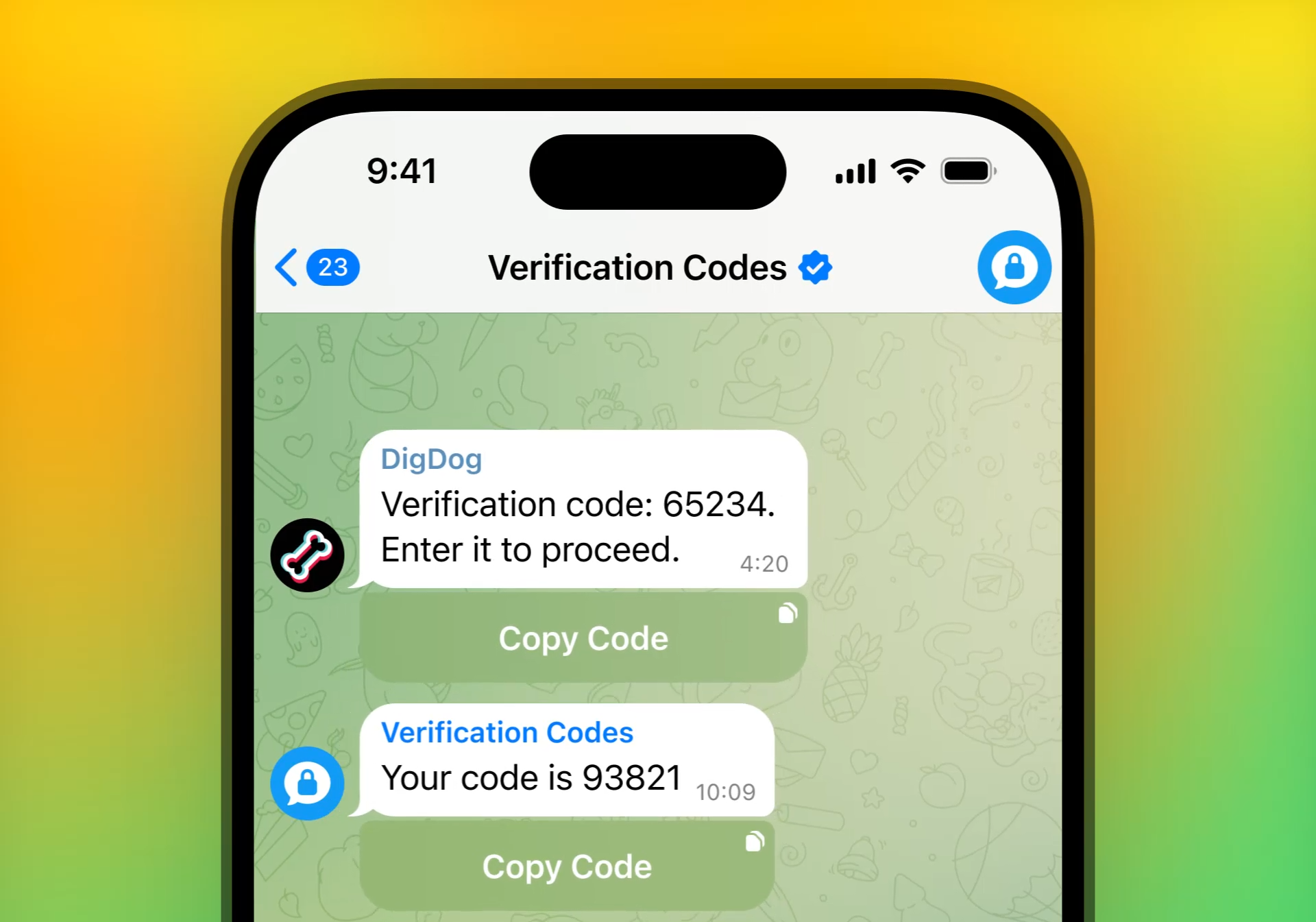
However, Secret Chats are not enabled by default.
Telegram chose to make regular encryption the default (instead of E2EE) to make the service more user-friendly. E2EE services typically experience additional complications when trying to sync messages and content to new devices for the first time.
 Pavel Durov
But this convenience exposes users to risk, and combined with Telegram's marketing it puts users in a false sense of security.
Telegram's Secret Chats come with three major flaws:
- Research has proven that people don't mess with default settings, meaning few users will ever enable them (while having no idea that their chats are not protected as well as they think they are).
- Secret Chats are annoying to enable and use. You can only use them on mobile devices, you can't do group chats, and each new device requires you to initiate a new Secret Chat. (How are people supposed to know which chat to message?)
- Telegram's encryption is almost certainly garbage. Let's talk about that next:
MTProto
I promise once again to keep this very high level and non-technical.
There are many, many different types of encryption, and as you can imagine some are better than others.
In the cryptography space, there's a saying:
Don't roll your own crypto.
Security - especially cryptography - can be very complex, difficult, and easy to make mistakes (even for the best of experts). We already have a plethora of widely-accepted, solid cryptographic algorithms and measures. Therefore, the idea is that you should just stick with one of the tried-and-true protocols and focus on proper implementation rather than reinventing the wheel.
In light of that, it should come as no surprise when I say that Telegram rolled their own crypto, and it was bad.
When Telegram premiered, they used a custom-built encryption scheme called MTProto.
While most of Telegram's security criticisms have been aimed at the lack of default encryption and the way keys are generated (more on that shortly), numerous experts have also questioned the MTProto protocol itself over the years.
In response, Telegram upgraded to MTProto 2.0 in 2017. Researchers from University of Udine in Italy examined the published code in 2021, declaring that MTProto 2.0 is "formally correct" (aka "looks good in theory").
However, it should be noted that this is only one audit, done without cooperation from Telegram, access to their actual infrastructure, or other privileged information that official third-party audits typically have (I'll explain audits a bit more in a moment).
 Marino Miculan

Compare this to other widely used, battle-tested encryption schemes that have been analyzed by numerous experts. None of these have a 100% perfect track record, but when numerous experts perform audits, it gives a chance to find and fix these flaws. How many flaws in MTProto have gone undetected because the company doesn't care to have their code regularly audited by experts?
The New Oil is supported by our audience. If you're getting value out of our work, please consider supporting us. (It gets rid of this banner and you get posts a week early!)
The Problem of Trust
Of course, there is one glaring hole in all of this: Telegram is designed to trust the server, which is not source available.
"Source available" is a generic term simply meaning that the code used in a software is published in a way where anyone can look at it and examine it, usually to help check for bugs and security vulnerabilities that can be reported and fixed before the bad guys find it.
It's also a popular method of demonstrating transparency and good faith: "you can verify that our software does what it says it does. We have nothing to hide."
In theory, the servers being closed source is not a problem in and of itself. There are many privacy-focused services that are designed in such a way where all the security operations happen on-device, meaning that even if the server were compromised, your content is safely encrypted before leaving your device.
Telegram is not one such service. Telegram designed in such a way where the server is responsible for handling all cryptographic operations, even initiating Secret Chats.
In plain English: remember how I mentioned a key earlier? The server is involved with the key initially, which means the server could potentially store a copy of the key or make it weak (either on purpose or on accident). And since Telegram's server is not source available, we must trust it without any way to verify.
Again: this is not an accusation of malice. Security is very complex and hard to get right. It's entirely possible that everyone at Telegram is acting in good faith but mistakes still happen. Telegram only has 30 developers. There are companies with exponentially more developers who still make mistakes.
Audits
Earlier I mentioned third-party audits.
Third-party audits are where companies pay an impartial third-party expert to come in and examine your code and design and report any vulnerabilities they find. Some common, well-respected auditors in the privacy space include Trail of Bits and Cure53.
Third-party audits are very expensive, so typically smaller projects do them very rarely (if at all). But larger companies - like Proton, Mullvad, and 1Password - get audited regularly (usually at least once a year).
I consider third-party audits especially critical for companies who don't publish their source code or otherwise require user trust in some way as it typically shows that they're making a good faith effort and can often act as an impartial endorsement - "we examined things and found it's adequate."
Telegram has never paid for any third-party expert audits.
This means that Telegram makes wild claims of security and while also making literally no effort - not even the barest minimum - to back these claims up with evidence, despite the fact that they absolutely could afford to have audits done regularly.
At every single step - from regular unencrypted messages to Secret Chats - you're simply trusting Telegram to be acting in good faith, have good security, and implement it properly without any real reason to trust them other than "trust me bro, I'm cool."
In fact, you've got very good reason not to.
Durov's Lies
Let's quickly review what we've established:
- Telegram lulls users into a false sense of security by marketing itself as "private" and "secure," but:
- By default chats are not encrypted
- There's no actual technical protections, only pinky promises.
- Secret Chats are opt-in but are inconvenient to use and most people use default settings.
- Telegram's entire architecture relies on you trusting their servers, even for Secret Chats.
- Said servers are not visible to the public and have never been audited by third-party experts.
While this doesn't paint Telegram in a great light, it's not a smoking gun that they're untrustworthy.
So why do I keep insisting that?
Because Pavel Durov is a f*cking liar who gaslights users. And I can prove this.
How It Started
Between 2016 and 2024, Telegram's FAQ stated:
To this day, we have disclosed 0 bytes of user data to third parties, including governments. (Emphasis mine.)
Over the years, Telegram's "transparency report" (which was just a Telegram channel) remained empty. The unspoken implication (intentional or otherwise) was that Telegram had indeed never handed over any data.
It's worth noting that the standard practice for transparency reports from other companies (even privacy-averse ones like Google, Amazon, and Meta) is to still report the number of data requests you received and how many you complied with, even if the number is "0."
So in theory, Telegram's bot should've at least periodically been posting "we received 0 requests for user data." (See Qubes' Warrant Canaries as an example of this.)
The Truth Gets Exposed
On August 24, 2024 Pavel Durov was arrested in France on charges that he wasn't doing enough to curb illegal activity such as child sexual abuse material, drug trafficking, and more on his platforms.
Overnight, Telegram changed their tune and said they'd make some changes to cooperate more with law enforcement requests in exchange for Durov's release. (He was still charged and forbidden from leaving the country, but at least he didn't have to sit in a jail cell.)
Shortly thereafter, Telegram's transparency report channel started posting reports, and it was revealed that Telegram has been sharing user IP addresses and phone numbers since 2018.
On September 24, Telegram also quietly updated their FAQ, which now says:
To this day, we have disclosed 0 bytes of user messages to third parties, including governments. (Emphasis mine.)
Of course, this was only news to people who were too busy brown-nosing Telegram & Durov to pay attention to facts that had been making headlines for years. (If you're one of the people who doesn't follow tech news, rest assured I'm not mocking you.)
In 2022, Telegram shared user data with both Germany and India in response to legal orders, and in 2023 they shared data with Brazil after being temporarily suspended for failure to cooperate in an investigation.
While these were only a few incidents, it was enough to make astute observers wonder why Telegram still wasn't issuing transparency reports or updating their website to acknowledge these requests. So when Telegram finally came clean, some of us weren't surprised.

So to recap the timeline:
- Telegram claims starting in 2016 that they have never shared any user data.
- Telegram provably shares user data in 2022 and 2023.
- Telegram's CEO arrested in 2024 for allegedly being complicit in the rampant crimes on or enabled by his platform.
- Telegram admits to sharing user data since at least 2018.
- Telegram quietly changes their website to say they have never shared any user messages.
Now remember earlier:
- Telegram is not encrypted by default.
- If you decide to enable E2EE:
- It's very obtuse to use
- It requires you to trust the server with cryptographic processes
- Telegram has a history of bad cryptography.
- The servers have never been audited by third-party experts.
Alternatives
If you're a Telegram user reading this, you might be frustrated. You may feel lied to, overwhelmed by all this technical jargon, and confused by all the marketing.
You just want somewhere safe to talk to your friends: somewhere that isn't being mined for ads, that can't be censored by governments or companies just because they don't agree with what you have to say.
The truth is that there is no perfect platform that's right for every person in every situation. There are pros and cons to every messenger.
But thankfully, there are plenty of messengers out there who - unlike Telegram:
- are encrypted by default
- use solid encryption protocols
- don't require you to trust the server
- protect you via technical guarantees and not policies
- have been audited
- are source available
- are still feature rich and user-friendly
Signal
At this time, Signal is the golden standard for private and secure messaging, so much so that many other encrypted messengers (like WhatsApp) build on the Signal Protocol and it's even widely used by government officials (of all political stripes), military, and law enforcement. Signal is regularly audited, encrypted by default, supports encrypted chats on desktop, syncs across multiple devices, and features lots of quality-of-life perks like stickers, GIFs, group chats, channels, and more. They've even begun experimenting with phone-number-free sign-ups.

SimpleX
SimpleX became a popular alternative after Telegram's duplicity was uncovered. SimpleX requires no information to sign up and has no persistent identifiers (like username or phone number). It's decentralized and uses multi-hop/multi-provider architecture for maximum anonymity. However, SimpleX is still very early in development and may be missing more mainstream features. It may not be right for less tech-savvy users.


Session
Session originally began as a fork of Signal that was onion-routed and didn't require phone numbers, but has since grown into its own. Usernames are randomly generated gibberish. In terms of features, Session is a bit of a halfway between Signal and SimpleX: It's more user-friendly than SimpleX, but still appeals to users who want something decentralized and doesn't require user data to sign up.


There are some who continue to use Telegram as a social media app, recognizing that all claims of privacy and security are (at best) suspect. While this is certainly better than believing their lies, I would strongly encourage you to consider migrating your communities elsewhere if possible.
- Signal is probably ideal for small group chats such as friends and family.
- SimpleX probably has the best replacement for Telegram public channels.
Whatever you go with, I think Telegram has proven themselves completely undeserving of your patronage.
Tech changes fast, so be sure to check out our website for all the latest recommendations, tools, services, and more.


