Book Review: "Privacy's Defender" by Cindy Cohn
The EFF Executive Director's memoir offers insight into how the modern internet came to be.
For those who grew up outside the early hacker scene, there's an entire parallel world history that we missed out on.
This is one reason I'm a big fan of podcasts like Darknet Diaries and Firewalls Don't Stop Dragons, and nonfiction books such as Permanent Record and The Age of Surveillance Capitalism. They occasionally shed light on how we got here and counter the implied narrative that it all just sort of "happened" organically. Many of the positive aspects of the digital world - encryption, privacy, and democratization - had to be fought for and won.
For example, did you know the U.S. government once tried to classify encryption software as a weapon? That’s just one of the battles Cindy Cohn fought—and won—to give us the secure internet we rely on today, and why I was intrigued when Cindy Cohn announced a memoir.
Cindy Cohn
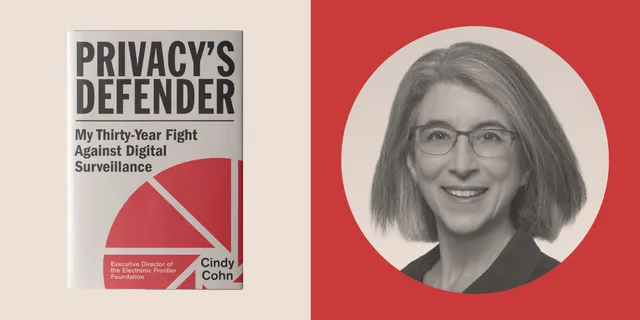
Cindy Cohn has been the executive director of the Electronic Frontier Foundation since 2015. Prior to that, she spent 15 years at EFF as legal director and general counsel, but before getting involved with the EFF, she spent some time working for the United Nations Centre for Human Rights. She's been fighting for digital rights since before most people knew the internet existed and her fingerprints are on some of the most consequential cases that shaped how the law understands your rights in the digital age.
I knew of Cohn long before her memoir, Privacy's Defender, was announced. She's been leading the EFF since before I got involved in privacy, I knew she had been the lead attorney on Bernstein v United States, and I was a regular listener to her "How To Fix The Internet" podcast, but admittedly that had been about the extent of my knowledge about her. So when the opportunity arose to get a more comprehensive history directly from the source, I jumped at the chance.
 Cindy Cohn
Privacy's Defender
Privacy's Defender is part memoir, part legal history, and part rallying cry. Cohn starts all the way at the very beginning and pulls no punches: she talks about the day her adoptive parents drove from Iowa to Detroit to pick her up when she was born; she briefly discusses growing up with a mother who suffered from severe bipolar disorder to the point that her mom had to be briefly institutionalized and medicated; and she shares how her parents eventually divorced, and how that "scandal" made her formerly cozy small town claustrophobic and suffocating. I'm sure these stories were difficult for her to decide to share with the world, and I was deeply humbled by her willingness to be so open and vulnerable with all of us strangers.
For those who came to learn more about the legal history of privacy, fear not! Cohn wastes very little time in getting to the "good parts." By page 20 she's already entering law school, by page 21 she's committing her first act of social engineering, and by page 25 she's meeting her first hacker friends (John Gilmore being the first of many early internet pioneers to be namechecked).
Alongside her personal life, Privacy's Defender is largely told in three "acts."
Act I focuses mostly on the landmark Bernstein v United States case, which is the reason the internet as we know it today exists. The case centered around Daniel Bernstein's right to publish an open-source encryption tool, which the government (at the time) attempted to regulate with the same rules as weapons like cruise missiles. Seriously. Let me quote the book to illustrate how much this case influenced the modern internet:
Thanks in part to the work we did in the Bernstein case, strong cryptography exists through the internet - letting you safely use services ranging from PayPal and Venmo to Signal, WhatsApp, and more. Thanks to encryption, you can have confidence that when you visit your bank's website, it's the real thing and not an imposter site.
Act II follows the story of whistleblower Mark Klein, who revealed how AT&T and the National Security Agency were in bed to spy on all Americans' phone calls. This section was my favorite, feeling a bit like a spy thriller as Cohn painted the scene. Mark literally showed up unannounced outside the EFF office in a trench coat - an anonymous stranger promising he had earthshattering information. I can only imagine the staffers trying to decide if they should offer him coffee or schizophrenia meds. Prior to this point, EFF employees had heard rumors that the government was wiretapping Americans, but they were unable to find anyone willing to come forward with hard evidence. Trusting Mark was probably a risk, the reward could alter the course of history.
Act III truly crescendos, starting with a phone call from CREDO - a phone carrier that financially donates to activist causes - who had received a long-rumored National Security Letter. These letters demanded data from companies under the auspices of national security and often came bundled with a gag order which prohibits the recipient from talking to anyone (such as media or even family members) about it. In fact, the CREDO representative who called EFF wasn't even sure they were allowed to seek legal council. This part of the book became truly massive in scope, reaching further and further into many names, cases, and events as the EFF fought hard to push back on this level of government overreach.
Of course, you can look up the cases online these days - the outcomes and the journey to get there - but wouldn't you rather read a firsthand account from the trenches?
The New Oil is supported by our audience. If you're getting value out of our work, please consider supporting us.
My biggest criticism of the book is that it can get a little too "in the weeds" at times when it comes to law. Cohn takes great care to distill complex and dry laws, verdicts, and concepts into something the average person can understand. Still, I'd be lying if I said I didn't occasionally catch my eyes glazing over and have to go back to reread a sentence or two. Regardless, at no point did I feel like I was sitting through a University of Michigan lecture or studying for "the bar."
Of course, this should be expected. Cohn is a lifelong lawyer who wrote a book about her career. Complaining that there's too much legal talk would be like reading a biography about Genghis Khan and complaining about all the violence.

Conclusion
Privacy's Defender is a book with wide appeal. If you're a privacy enthusiast, you'll want to read it to learn more about how we got here. I cannot overstate how influential Cohn has been in this space, and these three stories alone are landmark moments.
Even if you're not that hardcore about privacy, Cohn's story is unflinchingly human - successes, failures, setbacks, moments of raw honesty about her struggles to build a life outside of her career, and how she navigated it all. If you enjoy hearing other people's stories, you'll benefit from that greatly.
It's also just a good book to read. If you like to read nonfiction, this one is accessible, entertaining, and will add to your more complete understanding of the world we live in, which in my opinion always makes something worthwhile.
Privacy’s Defender is a reminder that the internet’s freedoms weren’t given. They were fought for and must continue to be fought for. In just a few weeks, Cohn will step down as executive director of the EFF and pass the torch to the next generation of privacy activists. Thanks to Cindy's work - and many like her - we now have a roadmap to help light the way.
You can learn more about Privacy's Defender - including where to grab a copy - here:
 Cindy Cohn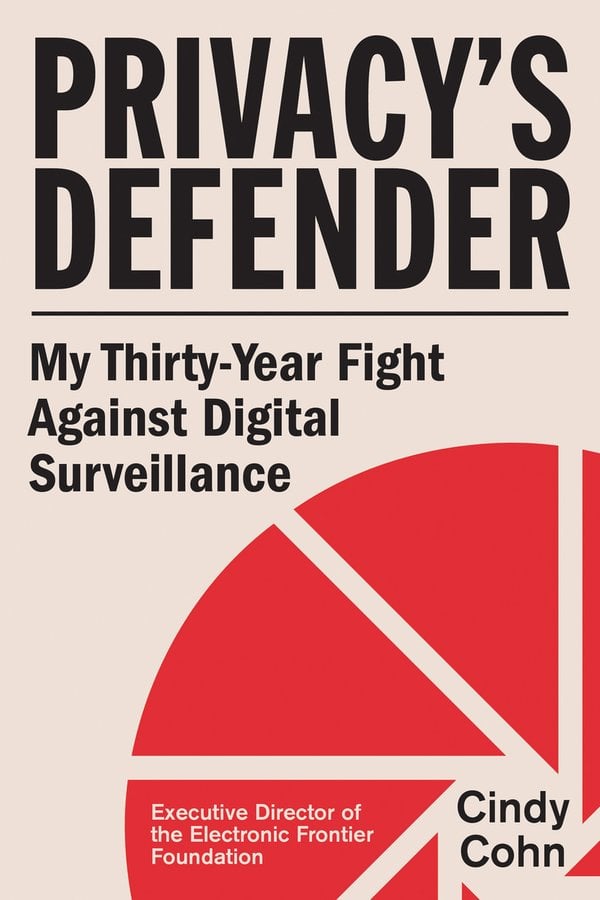
Bonus
I'd like to leave readers this week with a little extra. If you're still on the fence - or you're eager to get a taste while waiting for your book to arrive - I was incredibly fortunate to interview Ms. Cohn in late March on behalf of Privacy Guides. I'm extremely proud of this interview. You can watch it below.
 Privacy Guides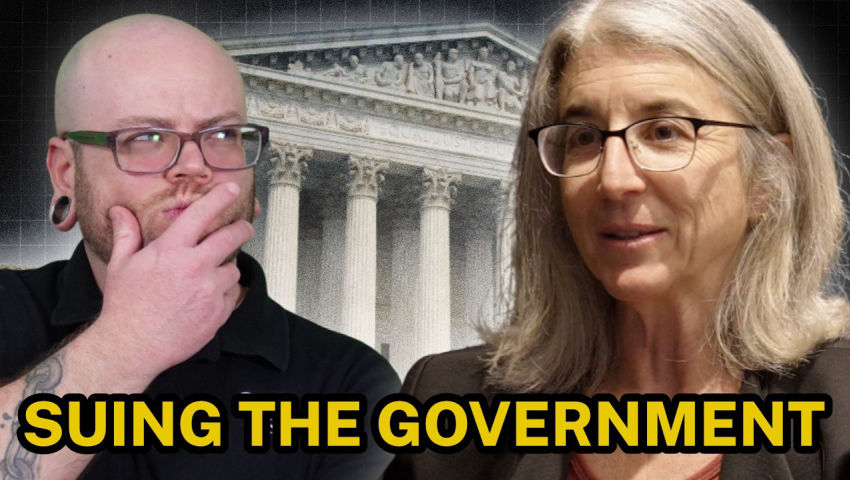
Tech changes fast, so be sure to check out our website for all the latest recommendations, tools, services, and more.
