
Best Private Email Provider in 2026
Your inbox is worth protecting. Here's the best tools to do that.

Like it or not, email is a critical part of our digital lives. It’s how we sign up for accounts, get notifications, and communicate with a wide range of entities online. Critics of email rightfully point out that email suffers from a significant number of flaws that make it less than ideal, but that doesn’t change the current reality.
In light of the facts, I believe that an encrypted email provider is a must-have for everyone in today’s age of rampant data breaches, insider threats, warrantless police access, and targeted advertising.
If I can get access to your emails, I can get a range of sensitive information including where you bank, communications with medical services, calendar reminders, news announcements from family, and more. In many cases, I can even perform account resets and easily take over your other accounts. So this week, let’s look into the top encrypted email providers The New Oil recommends and their features to help decide which one is right for you.
Defining "Private"
Before I offer my suggestions, I should take a moment to explain how I define “private” email, since marketing can often be misleading.
“Private email,” to me, means an email provider who enforces zero-knowledge encryption; that is to say a provider who cannot access your emails as they're sitting in your inbox. It’s not enough to simply pinky promise to respect your privacy like some popular choices in the privacy space. If they can access your data, so can an attacker who gains access whether a cybercriminal, a crooked employee, or a corrupt government with a court order.
Likewise, services should apply that encryption automatically wherever possible. The onus should not be upon the users for you to go generate your own PGP keys (or whatever security protocol the provider is built upon) and apply it yourself.
I also expect the clients (aka apps) of the service to be source available so that qualified, interested parties can verify that everything is implemented correctly and doing what it claims to.
Security is important and easy to mess up. Readers can see my full list of criteria here:
 Nathan Bartram
Proton
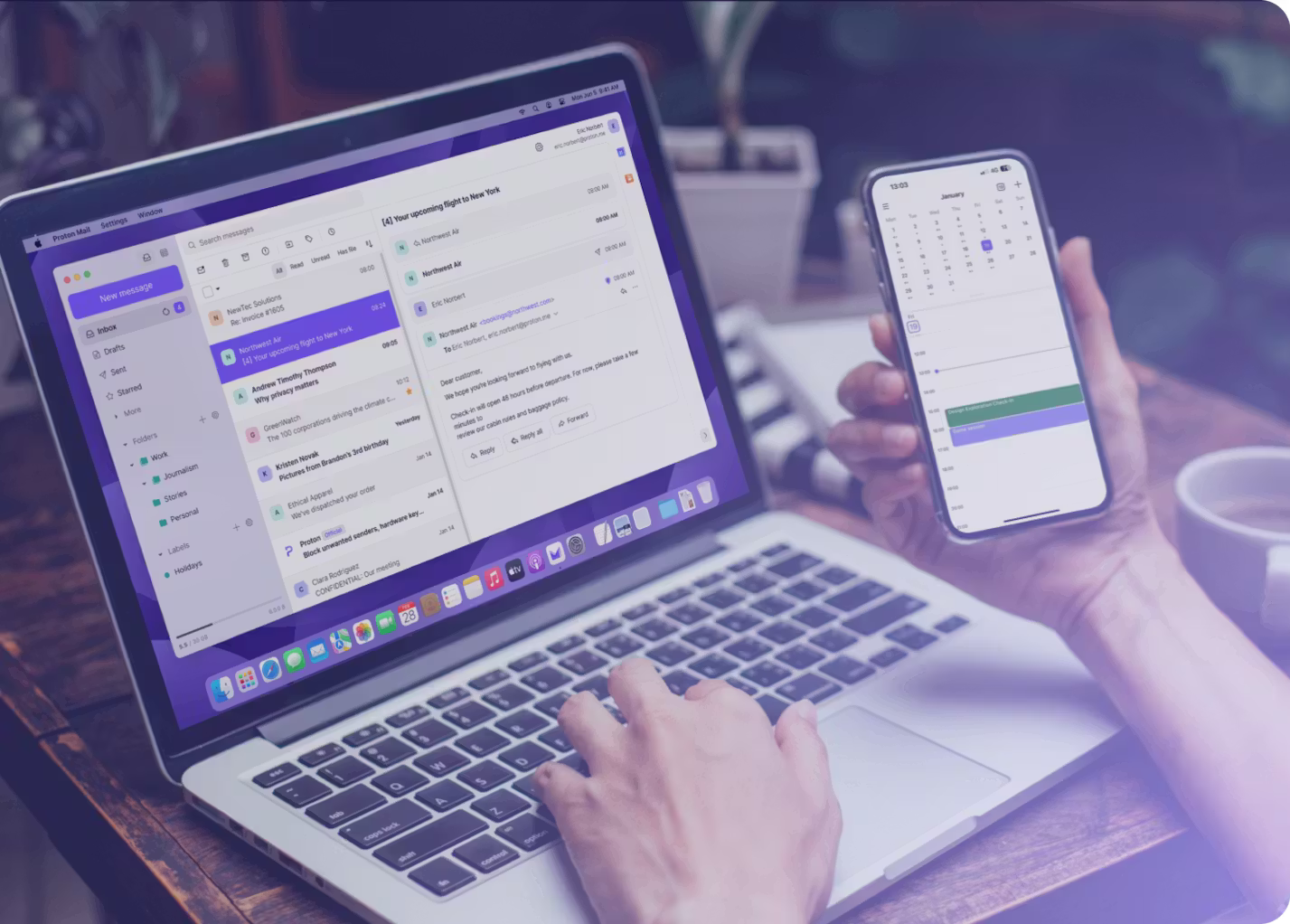
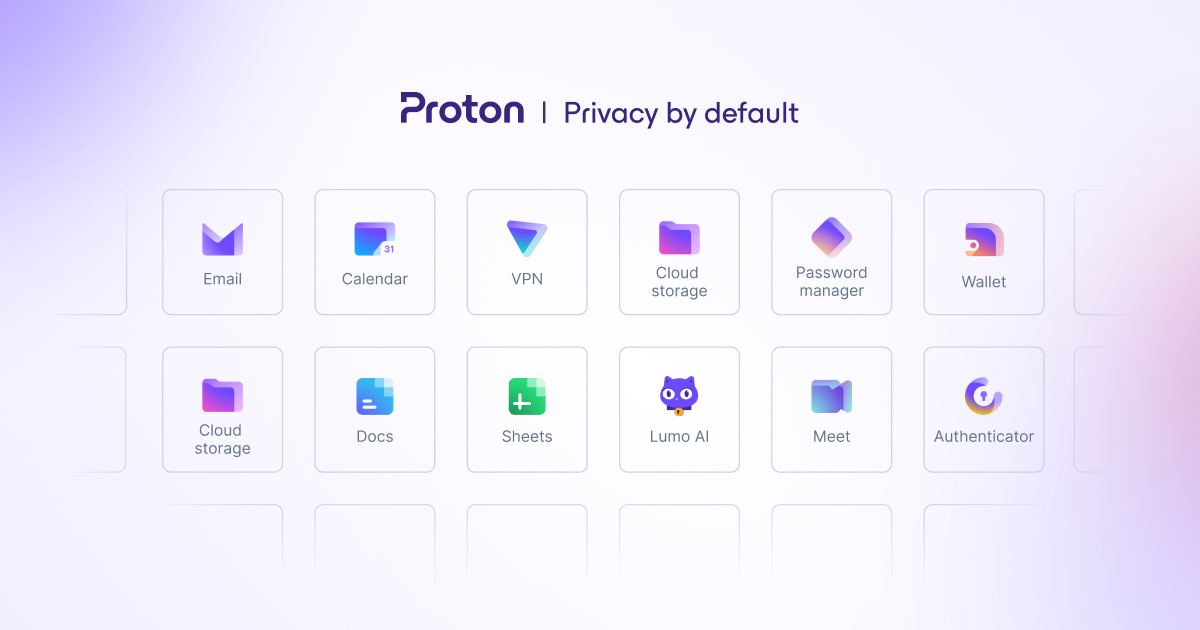
Proton is by far the biggest name in the privacy space, particularly when it comes to email and VPN, though in recent years they’ve begun to roll out a full suite of products including:
- Calendar
- Password manager
- Authenticator app
- Cloud storage (with Docs & Sheets)
- Video conferencing software
- AI Chatbot
- Bitcoin Wallet
Proton is aiming to become a user-friendly all-in-one suite, a replacement for Google or Apple geared toward mainstream users.
Of course, there is something to be said for not putting all your eggs in one basket, but for those who prefer the ecosystem approach to their services, Proton is a powerful service.
Additionally, Proton is compatible with PGP, meaning that people can potentially initiate a secure conversation with you even if they’re not Proton users (though this requires some extra effort from both you and them).
Proton offers a free tier you can use to test it out if you so choose.
The main drawback of Proton in my opinion (and that of many others) is feature parity. Proton operates under the philosophy of “if something is usable, why wait to publish it?” As such, they are notorious for publishing apps that – while functional – are still missing a number of features and need fine-tuning or that may be available on one platform and not another.
On the plus side, this allows them to prioritize much-wanted features thanks to the immediate feedback from the community.
On the other hand, they don't always do that and this "move fast and release things" mentality often results in situations where a feature in the iPhone app is missing from the Android app (or vice versa) or a Windows app is available while Mac and Linux are still in beta (if available at all).
Regardless, if you're looking for a private alternative to the Google or Apple ecosystems, Proton is probably going to be your best bet.

Tuta
Tuta is often considered Proton’s main competitor, and unlike many competitors in the tech space they do actually set themselves apart quite considerably.
Tuta is based out of Germany and currently offers a calendar in addition to their email with a drive client in beta.
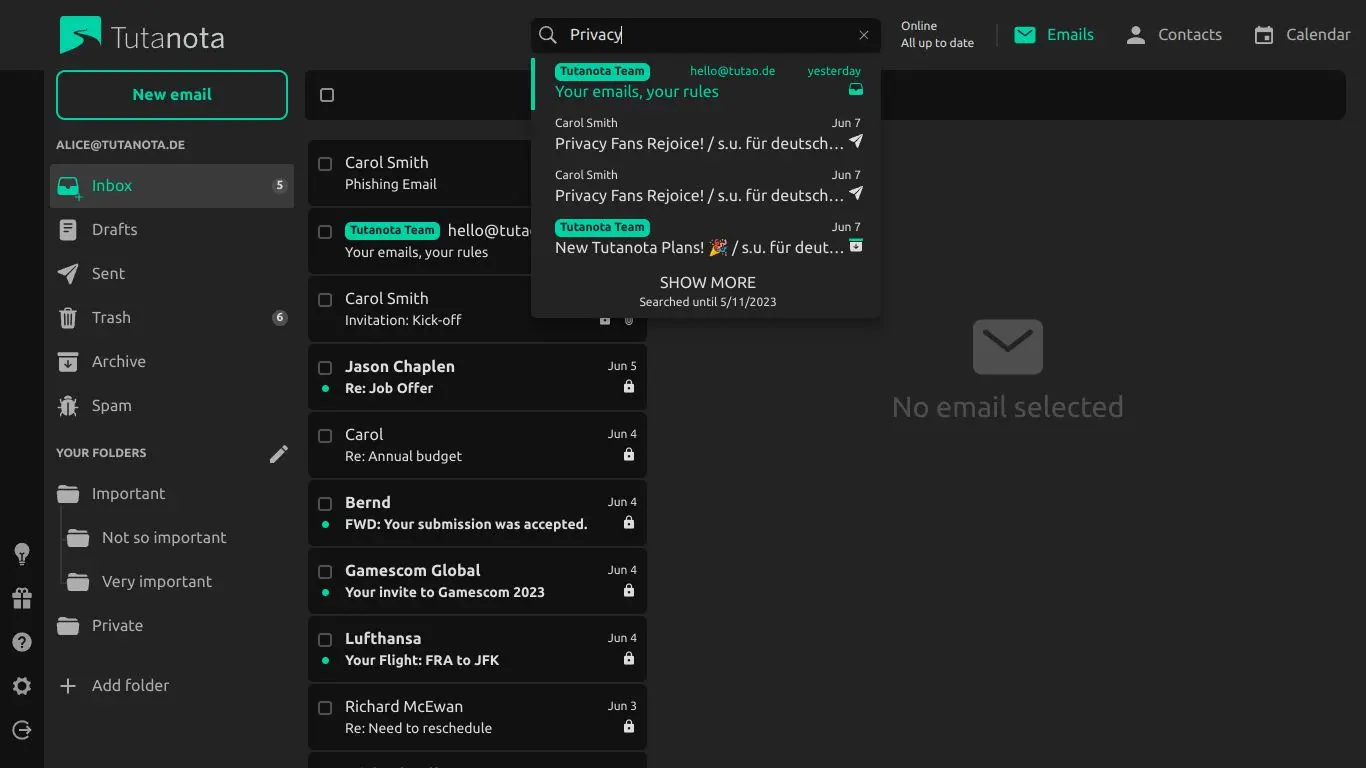
On the user-facing end, Tuta users will notice a much more consistent user experience across the board compared to Proton: all the apps should more or less have the same features regardless of your operating system.
Behind the scenes, Tuta is not based on PGP directly (technical readers can find more details here). The advantage of Tuta's encryption implementation is that it protects more metadata than traditional PGP, such as the email subject line. The drawback, however, means that only other Tuta users can initiate an end-to-end encrypted conversation with you.
Tuta's drawbacks compared to Proton mainly consist of fewer features, fewer offerings in their suite, slower performance, and a somewhat dated user interface. But for those who aren't bothered by that, Tuta offers innovative, strong features with a consistent experience.

Honorable Mentions
Proton and Tuta are the two most popular encrypted email providers, and with good cause. They check all the boxes and users really can’t go wrong with either.
However, some users may find that these providers don't meet their needs. So in the interest of offering more options to readers, here's a few honorable mentions worth considering. These services do not enable encryption-at-rest by default like Proton & Tuta, so if you use these providers be sure to check the support documentation on how to set that up.
Posteo
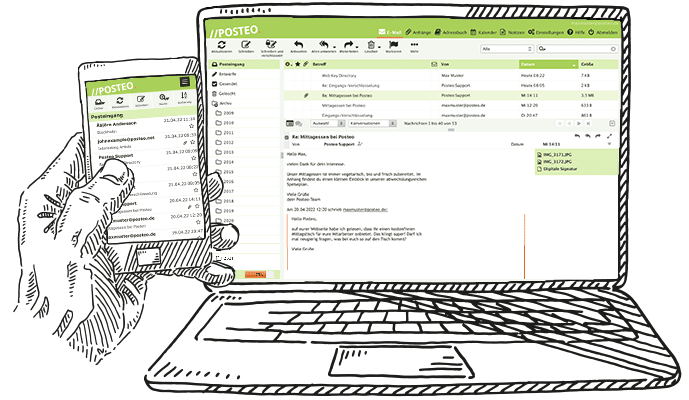
Posteo is based out of Germany and includes a calendar. Their main features are their reliance on green, renewable energy and their commitment to privacy and ad-free services, even for unencrypted accounts.
On the topic of encryption, users can opt to upload their own keys or to have Posteo generate them.
Posteo has no free tier (but they do offer a 14-day free trial and their pricing starts at a very affordable €1/month). On the plus side, this creates a sustainable business model that doesn't have to rely on selling data to fund the service, however it is a barrier to entry for those on a very tight budget.


Mailbox
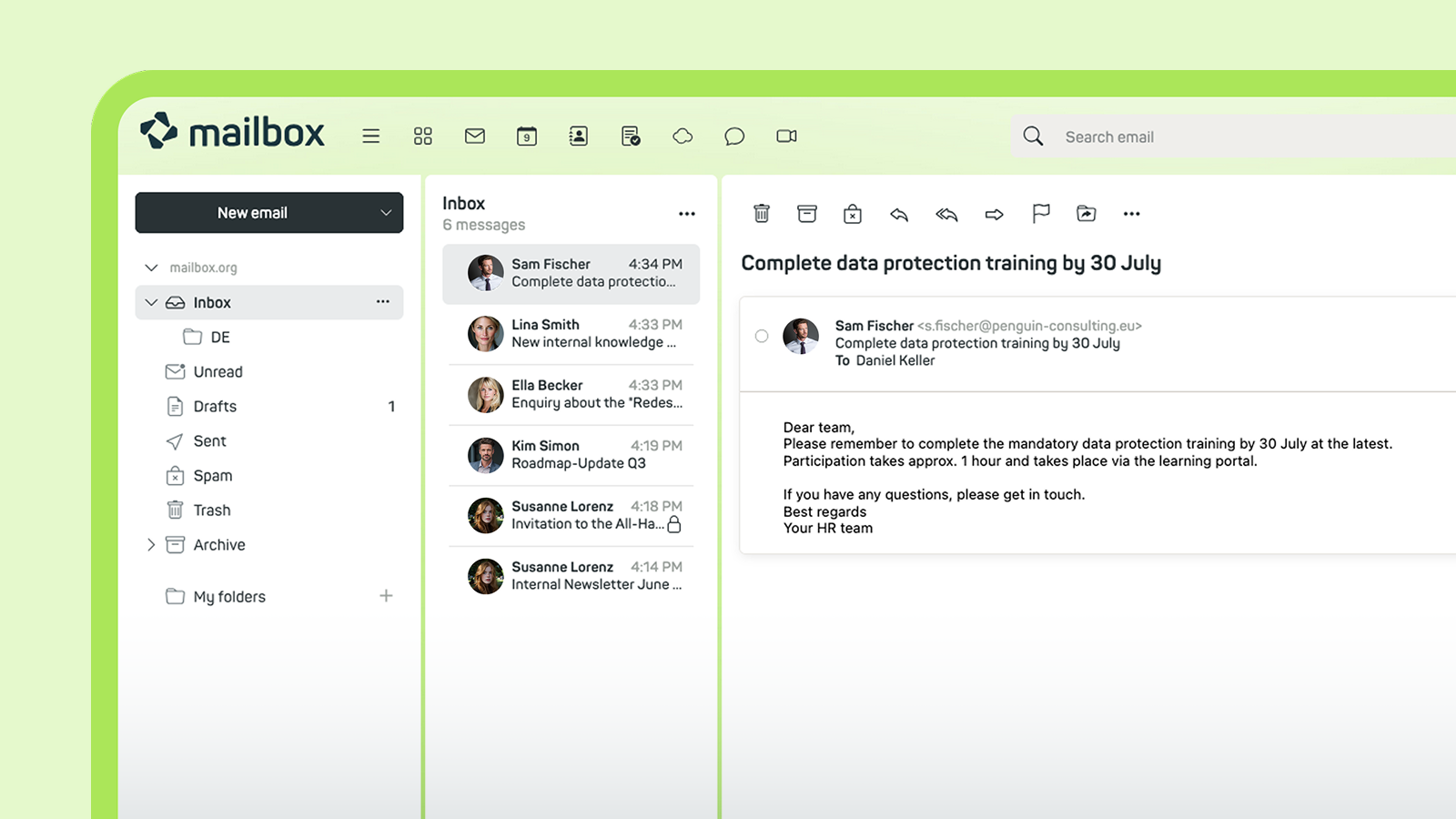
Mailbox is based in Germany and includes cloud storage, video conferencing, and office collaboration tools like calendar, chat, tasks, and more. Mailbox runs on renewable energy sources.
Mailbox offers a free trial of 30 days and their lowest tier is €1/month. Users can opt to upload their own keys or use the ones Mailbox provides.
The main difference that seems to separate Mailbox and Posteo is target audience: Posteo is marketed more toward private end-users while Mailbox offers a number of features aimed at organizations (though they both appear reasonably user-friendly). If you're a little more advanced or in charge of an organization, Mailbox will likely speak to you with their additional tools and focus on enterprise controls.

The New Oil is supported by our audience. If you're getting value out of our work, please consider supporting us. (It gets rid of this banner!)
In Defense of Encrypted Email
Critics of encrypted email will note that in most cases, using such a provider is only protecting half of the conversation. In nearly all email exchanges, you're corresponding with someone who's not using encrypted email - such as Gmail or Microsoft - so the email remains accessible on their end.
This is true, however this is also a logical fallacy: "all or nothing thinking." While it is important to keep that caveat in mind when communicating, by using a secure email yourself you're cutting your attack surface in half. Your emails will still be encrypted on your side.
When I ask these same critics for their proposed solution to the problems with email, the response is invariably along the lines of “people should be using something like Signal instead.” While I agree, my bank isn’t going to Signal me notifications any time for the foreseeable future. Or my veterinarian, or a job interview, or a receipt for an online purchase, and so on.
Like it or not, email is a critical component of modern digital life. Perhaps that will change someday, and if it does I’ll be quite happy to revise my stance. But for now, it’s a necessary evil and therefore - just like every other facet of digital life - we should strive to reduce the risks as much as possible.
If you’re not using an encrypted email provider, I strongly to encourage you to start immediately. There are likely other great options out there for more advanced users who want different features, but for most mainstream users one of the choices on this list will be a great place to start.
Tech changes fast, so be sure to check out our website for all the latest recommendations, tools, services, and more.


